Refrigerator Too Cold? What Could Be Wrong
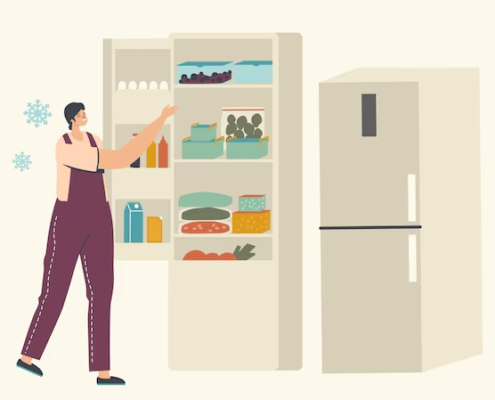 A refrigerator should keep food cold, but it should not freeze everything inside. If your milk has ice in it, vegetables are freezing, or drinks are turning slushy, your refrigerator may be getting colder than it should.
Sometimes a refrigerator that is too cold only needs a simple adjustment. Other times, the problem may involve airflow, a temperature sensor, or another part that controls cooling. Finding the cause can help you stop wasting food and determine whether your refrigerator needs repair.
Article Summary
- The Refrigerator Temperature Is Set Too Low
- Food Is Too Close to the Air Vents
- The Air Damper Is Stuck Open
- The Thermistor Is Not Reading the Temperature Correctly
- The Temperature Control Thermostat Is Faulty
- Airflow Inside the Refrigerator Is Uneven
- The Control Board May Have a Problem
- When to Call for Refrigerator Repair
- Get Your Refrigerator Cooling Normally Again
1. The Refrigerator Temperature Is Set Too Low
Before assuming something is broken, check the temperature setting. A refrigerator should generally stay around 37°F. If yours is set much colder, food may begin freezing, especially items with a high water content.
Make a small adjustment and give the refrigerator time to respond. Avoid making several large changes within a short period because it can take time for the temperature to stabilize. If the temperature setting looks normal but your refrigerator remains too cold, something else may be affecting the cooling system.
2. Food Is Too Close to the Air Vents
Your refrigerator uses vents to move cold air through the fresh food section. Areas directly beside these vents can be much colder than other parts of the refrigerator. If you place milk, produce, eggs, or other sensitive foods directly in front of a vent, they may freeze even though the overall refrigerator temperature is normal.
Try moving the affected food to another shelf. Avoid placing containers directly against the back wall or blocking visible vents. Pay attention to where food freezes. If it happens in only one area, placement or airflow may be the main problem.
If food is freezing throughout the entire refrigerator, the issue is more likely connected to a temperature control or cooling component. Our guide on why your refrigerator keeps freezing food explains more about why certain foods or areas of the refrigerator may become too cold.
3. The Air Damper Is Stuck Open
Many refrigerators move cold air from the freezer into the fresh food section. The air damper helps control how much of that cold air enters. The damper should open when the refrigerator needs more cooling and close when the correct temperature has been reached.
If the damper gets stuck open, too much freezer air may enter the refrigerator. This can cause food near the vent to freeze and lower the overall temperature. A damper can stop working because of ice buildup, a damaged part, or a problem with the controls that tell it when to open and close.
You may be able to see the damper on some refrigerator models, but diagnosing why it is stuck can require further inspection.
4. The Thermistor Is Not Reading the Temperature Correctly
The thermistor is a sensor that monitors temperature inside many refrigerators. It sends temperature information to the refrigerator’s electronic controls. Those controls use the information to decide when the cooling system needs to run.
If the thermistor sends the wrong reading, your refrigerator may think it is warmer inside than it really is. The cooling system may then run longer than necessary. As a result, temperatures can drop too low and food may begin to freeze.
You might also notice that the refrigerator runs for unusually long periods. A temperature sensor cannot always be diagnosed by looking at it. A technician may need to test the thermistor and compare its readings with the actual temperature inside the refrigerator.
5. The Temperature Control Thermostat Is Faulty
Depending on the refrigerator, a temperature control thermostat may help regulate the cooling system. A faulty thermostat can cause the refrigerator to cool longer than needed. Even if you change the temperature setting, the appliance may continue getting too cold.
One clue can be a refrigerator that seems to run almost nonstop. Refrigerators naturally cycle on and off throughout the day. However, a machine that rarely stops running may have a cooling or temperature control problem.
If this sounds familiar, read our guide on why your refrigerator runs constantly for other possible causes. An appliance repair technician can test the thermostat and related parts to determine whether the refrigerator is receiving the correct temperature information.
6. Airflow Inside the Refrigerator Is Uneven
Good airflow helps keep temperatures consistent from one part of the refrigerator to another. Overpacking the shelves can interfere with that airflow. Large containers can block vents and prevent cold air from moving throughout the fresh food section.
You may then have one area that is freezing cold while another area is warmer than it should be. Try leaving some space between items and keeping the vents clear. Avoid pushing food tightly against the back of the refrigerator.
Fan problems can also affect airflow. If an internal fan is not moving air correctly, temperatures may become uneven. Airflow problems can cause the opposite issue as well. Sometimes the freezer works while the refrigerator is not cooling, even though both sections are part of the same cooling system.
7. The Control Board May Have a Problem
Modern refrigerators use electronic control boards to manage many functions. The control board receives information from sensors and uses that information to control fans, cooling components, and other systems.
Control board problems are less common than simple issues such as incorrect settings or blocked vents. However, a faulty board can sometimes cause unusual cooling behavior.
You may notice temperature changes along with other problems, such as fans running at unusual times or controls that do not respond correctly. Because control boards can be expensive, they should not be replaced based on a guess. Other temperature and airflow components should be tested first.
A diagnosis from a professional appliance technician can help determine whether the control board is actually responsible.
8. When to Call for Refrigerator Repair
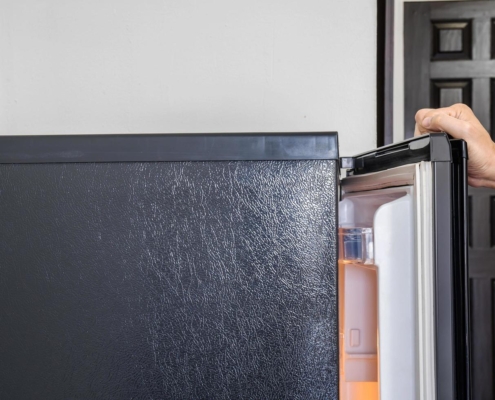 If your refrigerator is too cold, start with the easy checks. Look at the temperature setting, move food away from cold-air vents, and make sure groceries are not packed tightly against each other. Give the refrigerator time to adjust after making changes.
You should also consider repair if the refrigerator runs constantly, temperatures change without warning, you hear unusual noises, or large areas of the refrigerator begin freezing.
If you are unsure whether the problem needs professional attention, our guide to the signs your refrigerator needs immediate professional attention covers other warning signs worth watching.
9. Get Your Refrigerator Cooling Normally Again
Comfort Appliance Repair provides refrigerator repair throughout Covington, Buford, Lawrenceville, and surrounding Georgia communities. We can diagnose temperature problems and determine what your refrigerator needs to work properly again.
Call (678) 480-5406 to schedule refrigerator repair service.
If you need Atlanta refrigerator repair because your refrigerator is too cold or keeps freezing food, contact Comfort Appliance Repair to find the cause and get your appliance back to the right temperature.
By Dennis Godynuk, Owner of Comfort Appliance Repair
Dennis Godynuk is the owner of Comfort Appliance Repair in Covington, GA. Comfort Appliance provides fast and reliable repair services for all major household appliances. Dennis and his team of experienced technicians can tackle any problem, from broken refrigerators to malfunctioning dishwashers, and their prices are very competitive. Customers can rest easy knowing that their appliances are in good hands when they call Comfort Appliance Repair.