Why Your Refrigerator Keeps Freezing Food
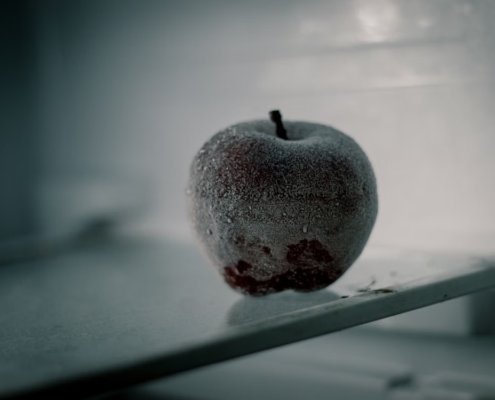 Opening your refrigerator and finding frozen lettuce, solid milk, or icy leftovers is more than an inconvenience. Your refrigerator should keep fresh food cold without freezing it.
If your refrigerator keeps freezing food, the problem may be as simple as the temperature setting or where you place groceries. It can also point to a faulty sensor, damper, or other part that needs repair.
Understanding the common causes can help you protect your food and figure out whether your refrigerator needs professional attention.
Article Summary
- The Temperature Is Set Too Low
- Food Is Blocking the Air Vents
- Food Is Stored Too Close to Cold Air
- The Thermistor Is Not Working Properly
- The Air Damper Is Stuck Open
- The Temperature Control Thermostat Is Faulty
- The Refrigerator Has an Airflow Problem
- When to Call for Refrigerator Repair
- How to Prevent Food From Freezing
- Get Your Refrigerator Temperature Back to Normal
1. The Temperature Is Set Too Low
Start with the simplest possibility: your refrigerator may be set too cold. Most refrigerators should stay around 37°F, with a general recommended range of about 35°F to 38°F. If the temperature is set much lower, some foods may begin to freeze.
Someone in your household may have accidentally changed the setting. This can happen while cleaning the refrigerator or moving food around. Check the temperature control and make a small adjustment if needed. Give the refrigerator time to respond before changing the setting again.
If you have a separate refrigerator thermometer, use it to check the actual temperature. The number shown on the refrigerator controls does not always match the temperature throughout every part of the appliance.
2. Food Is Blocking the Air Vents
Your refrigerator needs steady airflow to maintain an even temperature. Cold air enters the fresh food section through vents. If containers, bags, or other items block those vents, cold air can become concentrated in one area.
Some food may freeze while other parts of the refrigerator remain at the correct temperature. An overpacked refrigerator can also make it difficult for air to circulate. Try leaving some open space between food and keeping items away from the vents.
Airflow problems can cause several different cooling issues. In some cases, homeowners experience the opposite problem, where the refrigerator is not cooling but the freezer works.
3. Food Is Stored Too Close to Cold Air
Sometimes nothing is wrong with the refrigerator itself. The location of your food may be the problem.
Certain areas inside a refrigerator are naturally colder than others. Food placed directly in front of a cold-air vent may freeze even if the overall temperature is correct. Produce is especially sensitive. Lettuce, berries, vegetables, and other foods with high water content can freeze quickly when exposed to very cold air.
If the same items keep freezing in the same part of your refrigerator, try moving them to another shelf or drawer. You can also check your owner’s manual to find the location of the air vents. Keeping sensitive foods away from those areas may solve the problem without requiring a repair.
4. The Thermistor Is Not Working Properly
The thermistor is a temperature sensor inside your refrigerator. It measures the internal temperature and sends that information to the refrigerator’s control system. The appliance then uses that information to decide when cooling should turn on and off.
If the thermistor is faulty, it may send incorrect temperature readings. Your refrigerator could think the inside is warmer than it really is and continue cooling for too long. This can lead to frozen food, unusually long run times, and uneven temperatures.
A faulty thermistor can be difficult to diagnose without testing. If adjusting the temperature does not solve the problem, a technician can determine whether the sensor is working correctly.
5. The Air Damper Is Stuck Open
The air damper controls how much cold air moves from the freezer into the refrigerator section.
It should open and close as needed to maintain the correct temperature. If the damper becomes stuck open, too much cold air can enter the fresh food section. Food near the vent may begin freezing as a result.
You might notice that one part of the refrigerator is much colder than another. Items near the back or upper section may freeze while food in other areas stays normal. The damper can become stuck because of ice buildup, a mechanical problem, or a failed control component.
A professional refrigerator repair technician can inspect the damper and determine why it is not controlling airflow correctly.
6. The Temperature Control Thermostat Is Faulty
Some refrigerators use a temperature control thermostat to manage the cooling system.
If the thermostat stops working correctly, the refrigerator may continue cooling after it has already reached the proper temperature. The result can be frozen food and a refrigerator that seems to run much longer than usual.
If you’ve noticed that your refrigerator runs constantly along with freezing food, a temperature control problem may be one possible cause. A repair technician can test the thermostat and other cooling components to determine which part is responsible.
7. The Refrigerator Has an Airflow Problem
Good airflow is important throughout the entire refrigerator. Blocked vents are one cause, but dirty components, ice buildup, fan problems, and an overpacked refrigerator can also interfere with circulation.
You may notice that some shelves are extremely cold while others feel warmer. Food may freeze in one area but stay completely normal somewhere else.
Pay attention to where the problem happens. If food freezes only on one shelf or near one vent, airflow may be the cause. If food freezes throughout the refrigerator, the problem may involve the temperature controls or another component.
Changes in cooling are worth watching closely. Knowing the signs your refrigerator needs professional attention can help you address problems before they become larger repairs.
8. When to Call for Refrigerator Repair
Start with simple changes before scheduling repair. Check the temperature setting, move food away from air vents, and make sure the refrigerator is not packed too tightly. If food continues freezing after these adjustments, there may be a problem with a sensor, thermostat, damper, fan, or control system.
You should also consider professional refrigerator repair if temperatures change frequently, the refrigerator runs almost nonstop, you hear new noises, or large areas of the fresh food section begin freezing.
Do not ignore the problem just because the refrigerator is still keeping food cold. A refrigerator that gets too cold is not operating correctly, and the underlying issue may become worse over time.
9. How to Prevent Food From Freezing
A few simple habits can help maintain a more consistent temperature inside your refrigerator.
Keep the refrigerator temperature around 37°F and avoid making large changes to the controls. Give the appliance enough time to adjust after changing a setting.
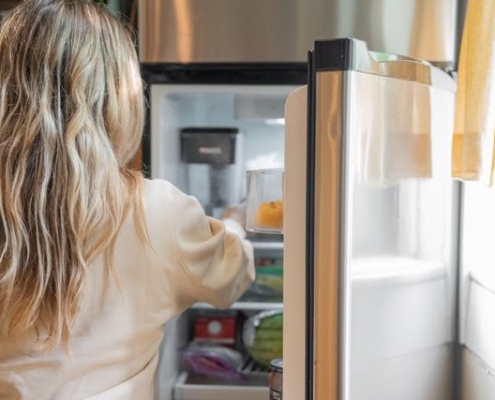
Leave space around air vents and avoid packing shelves too tightly. Store sensitive foods such as produce away from areas where cold air enters the refrigerator. It also helps to check door seals and keep the refrigerator clean so it can operate efficiently.
Pay attention to changes in your appliance. If one shelf suddenly becomes much colder than usual or food begins freezing without any change to the settings, investigate the problem early. Regular care can help you catch minor issues before they affect more food or put additional strain on the refrigerator.
10. Get Your Refrigerator Temperature Back to Normal
A refrigerator that keeps freezing food may have an incorrect temperature setting, blocked airflow, a stuck damper, or a faulty temperature control component.
Start by checking the simple causes. Adjust the temperature if needed, rearrange your food, and keep air vents clear. If the problem continues, it may be time for professional refrigerator repair.
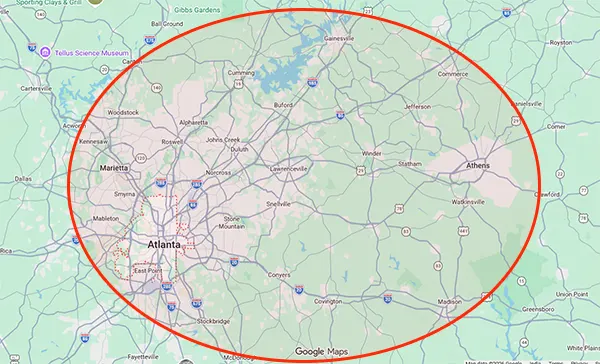
Comfort Appliance Repair provides refrigerator repair throughout Covington, Buford, Lawrenceville, and surrounding Georgia communities. We can diagnose the cause of uneven temperatures and determine what your refrigerator needs to work properly again.
If you’re searching for reliable Atlanta refrigerator repair because your food keeps freezing, Comfort Appliance Repair can help find the cause and get your refrigerator temperature back under control.
By Dennis Godynuk, Owner of Comfort Appliance Repair
Dennis Godynuk is the owner of Comfort Appliance Repair in Covington, GA. Comfort Appliance provides fast and reliable repair services for all major household appliances. Dennis and his team of experienced technicians can tackle any problem, from broken refrigerators to malfunctioning dishwashers, and their prices are very competitive. Customers can rest easy knowing that their appliances are in good hands when they call Comfort Appliance Repair.